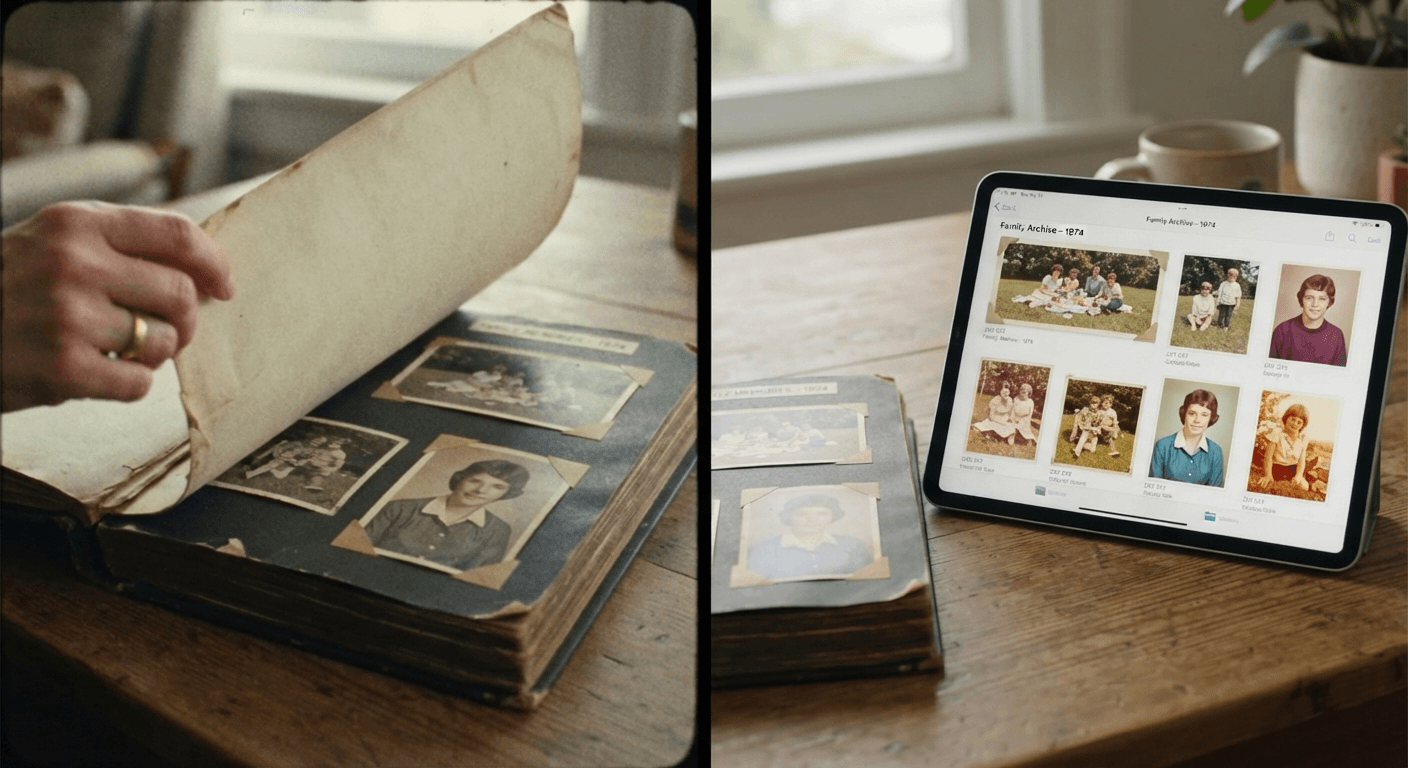
Photo | Slide | Negative - Digitization

Bring Your Visual History Back to Life in Vivid Detail.

We convert faded prints, brittle slides, and delicate negatives into stunning, high-resolution digital collections—preserving your memories for generations.


Preserving Every Frame: From Vintage Prints to Film Slides.

Specialized digitization services for print photographs (any size), 35mm/medium format slides, and fragile film negatives.

Print Photographs

From vintage sepia portraits to modern color prints of any size. We handle loose photos, scrap albums, and professional prints with equal care.

Slides & Transparencies

Specialized scanning for 35mm and medium format slides. We capture the hidden detail in these fragile transparencies that standard cameras miss.

Film Negatives

Careful handling of delicate negative strips and large-format film. We ensure the raw data is captured without damaging your original master copies.

A Gentle, Step-by-Step Journey to Digital Perfection

From careful collection and archival scanning to professional color restoration and metadata tagging—we handle the work while you keep your memories safe.

Step 01:

Secure Handling & Inspection

We gently handle your photos upon receipt, inspecting them for mold, moisture damage, or physical instability before a single scan begins.

Step 02:

Archival-Grade Scanning

Scanned at high DPI levels (typically 600+ DPI) .

Step 04:

Organization & Delivery

Your files are tagged with metadata (date/event) and delivered via secure download link or physical media. Optional captioning services included here too.

Step 03:

Restoration & Enhancement

We perform professional color correction to fix fading, balance contrast, and gently reduce the appearance of minor scratches and dust.

Why Professional Digitization Matters More Than You Think

We don't just scan...we restore. Our expert color correction brings back faded colors, removes dust/scratches, and organizes your library instantly.

Professional Color Restoration

We gently restore faded colors and balance contrast. Whether it's a faded wedding photo or a washed-out slide, we bring the original vibrancy back to life

High-Definition Clarity

Scanned at archival-grade DPI levels, ensuring every detail—from skin texture in portraits to film grain—is preserved for high-quality printing or large-screen viewing

Metadata Tagging & Organization

Stop digging through endless folders. We organize your library instantly by date, event, or subject, making massive collections easily browsable.


Efficiency Measured: Bulk Loose Photo & Album Digitization.
Streamline large-scale projects with our high-speed scanning workflow while maintaining meticulous handling standards for fragile albums.

High-Speed Loose Photo Scanning

 Bulk Digitization Made Simple.

Need to digitize hundreds of prints quickly? Our high-speed scanning workflow combines efficiency with careful handling, ensuring your bulk collection is preserved without delay.

Manual Album Digitization

Keep Your Albums Intact

We specialize in the delicate art of album scanning. We can digitize page-by-page to maintain the original order and context, or scan entire albums if they are stable.

Proven Volume & Expertise

We specialize in both bulk collections and single memories. Join one of the few firms offering professional captioning for family photo albums.

1 Million+ Images
Memories Preserved Annually
Loose Photos & Albums
All Formats Supported

Why Preserve Photos?

Why Preserving Your Photos, Negatives, and Slides Isn't Just a Nice-to-Have—it's Essential


We all carry stories in our minds, but where do they live? For most families, the answers reside in physical media: the glossy color prints lined up on a shelf, the delicate 35mm slides tucked inside a heavy box, or the large-format negatives stored in plastic sleeves. These images are invaluable windows into our past, capturing milestones that define us and documenting lives that have already passed.

However, there is a dark irony in how we store these treasures: the very materials used to capture them are often unstable. Without active preservation, these irreplaceable records are destined to fade, warp, or vanish entirely.

Here is why preserving your photographs, negatives, and slides is no longer an option—it is an urgent necessity.

1. The Chemical Clock is Ticking

The science behind photography has evolved from silver halides to dye-based color processes, but the chemistry underlying these images remains a ticking time bomb if left unattended.

  • Silver-Based Instability: Traditional black-and-white prints and tintypes rely on silver salts that can slowly oxidize over decades. If not stored in acid-free environments, they suffer from fading, discoloration (often turning brown or gray), and eventual total image loss where the silver fades to nothing but white paper.
  • Color Fade: Modern color photography uses dyes rather than pigments. Over time, these organic dyes break down, leading to "fading" of highlights and deepening shadows. This results in those beloved summer vacation photos losing their vibrancy, shifting from warm golds and greens to sickly yellows or murky grays.
  • The Rate of Decay: Without intervention, a standard color print can begin to show significant fading within 20–30 years, while silver prints may take longer but are equally at risk. Once that final image is lost forever, there is no going back.

2. The Physical Environment is Hostile

Even if you keep your photos out of direct sunlight, they are still living in a fragile ecosystem that actively works against their preservation.

  • Environmental Factors: Light (especially UV rays), humidity, and temperature fluctuations cause rapid degradation. High humidity can lead to mold growth on paper surfaces; low humidity makes paper brittle and prone to cracking.
  • Pests and Vermin: Moths, silverfish, and other insects are drawn to cellulose-based materials. They consume the photos, leaving behind holes that are impossible to repair with modern technology alone.
  • Accidental Trauma: We are often careless with our own memories. Photos can be torn, creased, or bent during handling, transport, or even when trying to frame them incorrectly. Once a photo is creased, the fibers of the paper are permanently compromised; you cannot "un-crease" it.
  • Natural Disasters: Fire, flood, and water damage represent catastrophic losses. Water doesn't just ruin photos; it activates chemical reactions that cause permanent staining and mold within hours of exposure.

3. The Album Problem: Acidic Sabotage

Perhaps the most common misconception is that storing photos in an old photo album protects them. In reality, many traditional albums actively destroy the images they hold.

  • Acid Migration: Most mass-produced albums from the early-to-mid 20th century were made with acidic paper and cardboard. Over time, these acids migrate through the pages onto the photographs themselves.
  • The Result: This "acid rain" causes the photos to yellow rapidly (a process called yellowing) and eventually becomes brittle enough to crumble into dust when handled. The photo is chemically damaged by its own container before it even leaves the shelf.
  • Buffer Zones: To prevent this, modern preservationists recommend placing a thin layer of archival-quality buffer paper between each photograph in an album or using sealed plastic sleeves specifically designed for negatives and slides to isolate them from ambient air and contaminants.

4. The Risk of Loss and Destruction

Finally, we must acknowledge the human element: carelessness and negligence lead to destruction more often than any natural disaster.

  • Unintentional Loss: Photos are frequently misplaced in attics, basements, or garages where they collect dust, moisture, and pests. When a family moves homes, thousands of photos can be left behind, forgotten in a pile, and subsequently destroyed by mildew or vermin over years.
  • Deliberate Acts: Regrettably, photos are sometimes lost due to theft, vandalism, or even intentional destruction during conflicts and tragedies.

The Solution: Digitization as Preservation

The only way to stop this cycle of decay is through proactive preservation. By converting your fragile physical media into high-resolution digital files, you perform two critical actions:

  1. Immortality: Digital formats are stable. Unlike film or paper that degrade chemically over decades, digital data can be backed up indefinitely and viewed on any device for centuries to come.
  2. Accessibility: Digitization allows these memories to be shared instantly with future generations who may not have the physical means to view old negatives, ensuring your family's story is told accurately without being distorted by fading colors or moldy paper.

Conclusion

Your photos are not just images; they are artifacts of human experience. They hold the faces of loved ones, the landscapes of places we've never seen, and the moments that shaped who we are today. If we do nothing now to preserve them against chemical instability, physical damage, and environmental decay, those stories will be lost forever.

Preserving your photos, negatives, and slides is an act of love for the past and a gift for the future. Don't wait until the images fade or vanish. Secure your history today.

Ready to Restore Your Photos?

Whether it's a single memory or millions of images, we have the capacity and care for your project.

Free assessment available for large collections.